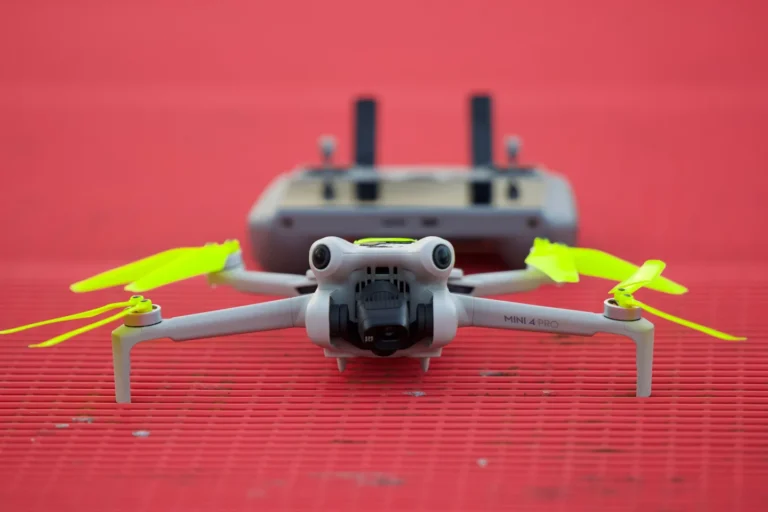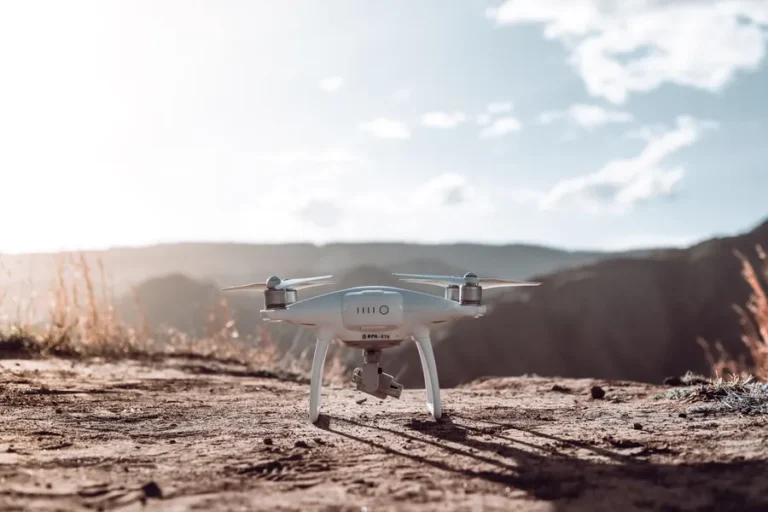

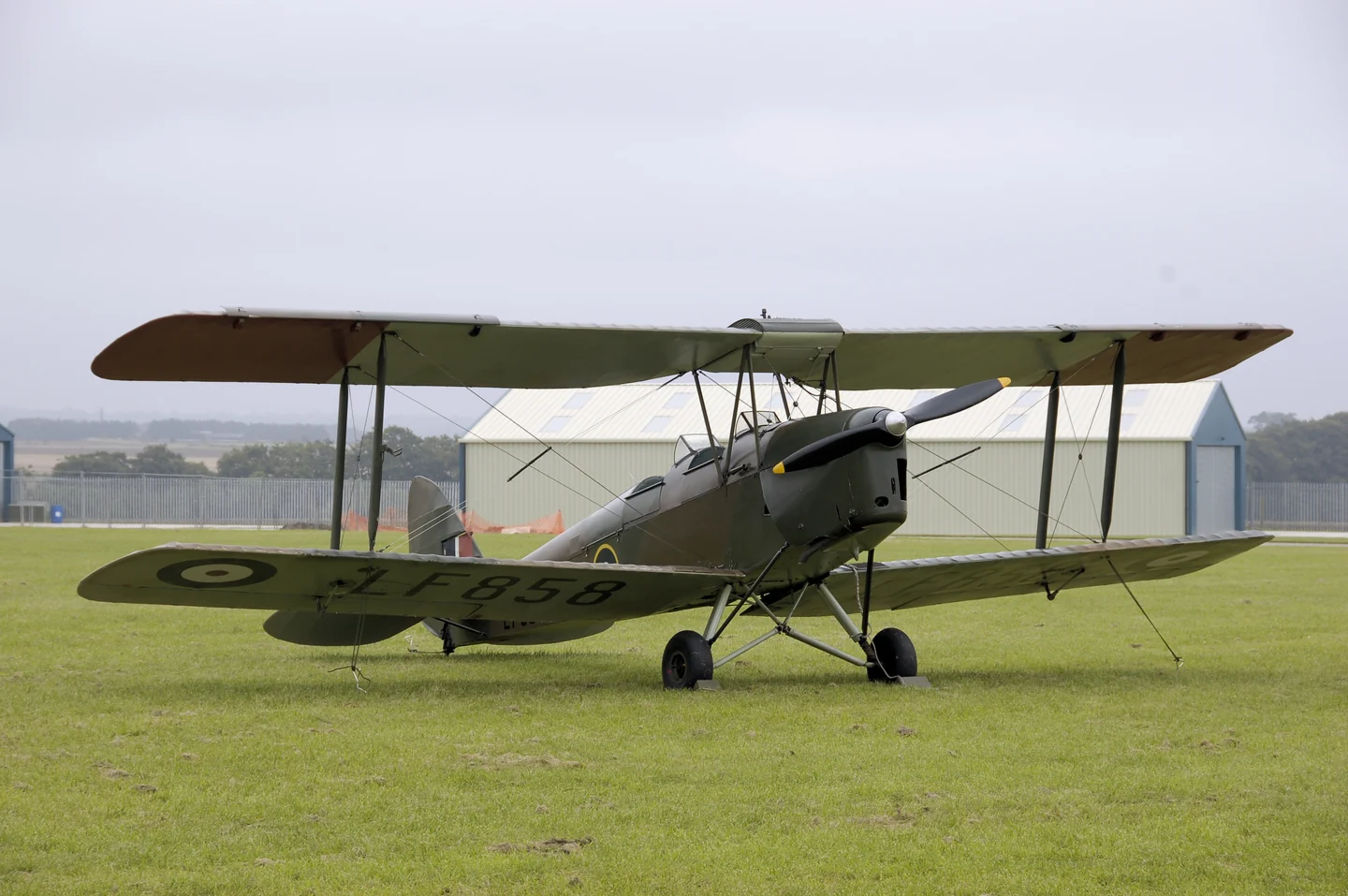
A drone is a male bee. How did its name come to mean an aircraft? In November 1936, Delmar S. Fahrney and Albert Hoyt Taylor needed a code name for an American radio-controlled aircraft. Fahrney later wrote that the inspiration came from a British biplane already known as the Queen Bee. Fahrney’s account, page 17.
Did the sound of the motors give drones their name?
A quadcopter taking off does sound a little like a bee. There is also a written account of the naming decision. In spring 1982, Fahrney published his recollections in the journal of the American Aviation Historical Society. When describing his conversation with Taylor, he specifically identified the British aircraft as their inspiration. Read Fahrney’s account.
There is a separate clue about when the word entered aviation. John F. Keane and Stephen S. Carr trace drone to Fahrney’s report on the second half of 1936. In a school paper, cite Fahrney’s recollections for the choice of name and the historians’ study for the date of the report. Keane and Carr, page 563.
How could the Queen Bee fly without a pilot when it had a cockpit?
The de Havilland DH.82B Queen Bee had fixed wings, a propeller at the front and a cockpit for a pilot. The same aircraft could receive commands by radio. The prototype flew at Hatfield on 5 January 1935. Later that year a demonstration covered take-off, manoeuvres and landing with nobody on board. A history of the DH.82B and its 1935 flights.
The Queen Bee served as an aerial target in training. Crews practised with a full-sized aircraft while its pilot stayed on the ground. An aircraft that returned in serviceable condition could fly again. The de Havilland Aircraft Museum documents at least three training flights by one example built in Glasgow in 1943. The museum’s aircraft record.
A timeline of the aircraft and the word
| Date | What the record shows | What it helps date |
|---|---|---|
| March 1917 | Archibald Low’s team tests the British radio-controlled Aerial Target. | An early experiment in uncrewed flight. |
| 1935 | The Queen Bee prototype flies. A complete radio-controlled flight is demonstrated that year. | A particular British aircraft. |
| 1936 | Keane and Carr identify drone in Fahrney’s half-year report. | An aviation use of the English word. |
| 1982 | Fahrney publishes his recollection of the conversation with Taylor. | Publication of his account of the name. |
| 2014 | Fundéu notes that the 23rd edition of the Spanish Royal Academy dictionary includes dron. | Recognition of the Spanish spelling in the dictionary. |
When a headline mentions “the first drone”, ask what happened for the first time. Nineteen years separate Low’s trial from Fahrney’s report. One helps date a flight experiment and the other helps date a word. The Smithsonian on Low’s project · Fundéu’s December 2014 language note.
Reading the photograph of the Queen Bee with a cardboard pilot
The Australian War Memorial holds a photograph of Queen Bee K5060 aboard HMAS Australia. A human-shaped figure is visible in the cockpit. Zooming in reveals its outline. The detail that identifies it comes from the catalogue entry, where the museum describes a cardboard dummy and dates the photograph to 1935. Photograph and archive record P00604.013.
A ten-minute activity for secondary school
- Observe for two minutes. Show just the photograph. Ask each student to describe one visible detail. If a student writes “the pilot is waiting”, ask which part they can establish by looking at the image.
- Check the record for three minutes. Show the catalogue entry. Have students find the reference P00604.013, the aircraft serial K5060 and the material used for the figure. The first identifier retrieves the photograph. The second identifies the aircraft in it.
- Rewrite for five minutes. In pairs, write a two-sentence caption. Describe the scene in the first sentence and credit the museum for the cardboard detail in the second. Keep the first draft so each pair can explain which word they changed and what evidence justified the change.
One possible caption reads, “A human-shaped figure can be seen in the biplane’s cockpit. The Australian War Memorial identifies the aircraft as K5060 and describes the figure as a cardboard dummy.” For another way to use a photograph as evidence, explore these classroom technology activities.
When to use drone, UAV, UAS or RPAS
In an English caption, drone is usually enough to name the aircraft. A technical explanation may need to distinguish the vehicle from the equipment used to operate it. Spain’s National Institute for Aerospace Technology (INTA) uses UAV for the uncrewed aerial vehicle and UAS for the aircraft system. For a radio-controlled example, the latter includes the aircraft, pilot station and communications link. RPAS specifies a remotely piloted aircraft system. INTA’s terminology guide.
Point to a wing in the photograph and you are describing the vehicle. Draw the pilot on the ground, the station and the radio link and you are describing the system. A first-person-view flight simulator illustrates another distinction. The screen shows what a camera on board would see, while the person giving the commands stays outside the aircraft.
Frequently asked questions
How do you write the plural of dron in Spanish?
Write drones, without an accent mark, in regular type in Spanish prose. For instance, “El museo conserva dos drones.” Use italics for drone when quoting the original English word in a Spanish text. FundéuRAE’s recommendation.
Can a fixed-wing aircraft without a camera be a drone?
Yes. The Spanish Royal Academy defines dron as an uncrewed aircraft. A radio-controlled biplane flying with nobody on board fits that definition whether or not it carries a camera. The Spanish dictionary entry for dron.
What date belongs under the photograph of K5060?
Use 1935, the date the Australian War Memorial assigns to photograph P00604.013. Include the archive reference in the caption so readers can identify the particular aircraft. Australian War Memorial photographic record.
Does Queen Bee mean zángano in Spanish?
Queen Bee means abeja reina and is the proper name of the British model. Zángano is the Spanish word for a male bee, the meaning of the English noun drone that Fahrney recalled choosing with Taylor.