To assess a cryptocurrency mining installation in 2026, start with the hardware, its power draw and the site where it will run. Hash rate alone tells you little about whether an installation is viable. You need to know the algorithm, efficiency, electricity tariff, ventilation requirements and other expenses. This guide shows how to calculate electricity costs and which other costs to include.
Three checks before installation
- Compare hardware running the same algorithm under similar conditions.
- Calculate electricity and total costs separately. A more efficient machine can still lose money.
- Check the power supply, noise and how heat will escape before choosing a location.
Matching the hardware to the network
Bitcoin uses proof-of-work mining. Miners typically use specialised chips called ASICs. The Bitcoin developer guide explains how mining hardware receives work and searches for valid hashes. A GPU cannot match the performance and efficiency of a dedicated SHA-256 ASIC. Hash rates for different algorithms cannot be compared as though they represented the same earning potential.
Before buying or reusing hardware, identify the network, algorithm and exact model. Check that the instructions are still current. Ethereum Mainnet no longer uses mining. Since 2022 it has used validators and proof of stake. An old tutorial on using a GPU rig to mine ETH describes an earlier version of the network.
What TH/s, watts and J/TH measure
Hash rate measures how many hashes the machine attempts per second. Power draw is an instantaneous rate. The energy on the electricity bill also depends on how long the machine runs. Efficiency relates energy to work done. For the same algorithm under comparable conditions, fewer joules per terahash means less energy per hash.
We use a documented model to illustrate the calculation. It is neither a purchase recommendation nor a claim that this is the latest model. The official BITMAIN S21 Pro user guide, dated March 2025, gives these figures for the 234T version.
| Measurement | Value | What the figure means |
|---|---|---|
| Hash rate | 234 TH/s | SHA-256 hashing performance |
| Power at the wall | 3,510 W | With inlet air at 25 °C |
| Energy efficiency | 15 J/TH | 3,510 divided by 234 |
BITMAIN specifies a variation of ±3% for hash rate and ±5% for power and efficiency. Use the figures to plan a scenario, then measure the unit at the installation site. Revisit the figures if the settings or temperature change.
Worked example of 30 days of electricity use
This hypothetical scenario makes no revenue forecast. Assume a constant draw of 3,510 W, running 24 hours a day for 30 days with 100% uptime. First convert the power into kilowatts. 3,510 W equals 3.51 kW.
3.51 kW × 24 hours × 30 days = 2,527.2 kWh. Multiply that energy by three hypothetical prices to see how the monthly cost changes.
| Assumed tariff | Energy used in the month | Calculated cost |
|---|---|---|
| €0.10/kWh | 2,527.2 kWh | €252.72 |
| €0.20/kWh | 2,527.2 kWh | €505.44 |
| €0.30/kWh | 2,527.2 kWh | €758.16 |
These figures cover the miner’s electricity alone. Budget separately for external cooling, fixed charges, any taxes outside the tariff, installation and the purchase price. Power measured at the wall already includes power-supply losses. To adapt the calculation, multiply the measured average power in each operating state by the hours spent in that state, then add the results.
Check electricity, noise and heat before switching on
The same manual specifies 220–277 V AC and a 20 A single-phase input. Have a qualified electrician check the supply and protective devices before assuming a household socket is suitable. The manual also specifies 76 dBA at 30 °C with the fan running at its maximum speed. The noise heard in a nearby home will depend on the installation.
The Bitcoin FAQ explains that the energy used by mining equipment ends up as heat. Plan how to remove it. Even with an open window or extra fans, check temperatures, airflow and the effect on people and equipment nearby.
💡 Choosing a site Decide where the miner will run before finalising the budget. If the power supply, heat removal or noise is unsuitable, revise the design before buying more hardware.
Difficulty, mining pools and costs beyond electricity
The Bitcoin network adjusts mining difficulty every 2,016 blocks, targeting an average interval of about ten minutes between blocks. A fixed hash rate cannot guarantee future output. A pool can make payouts less variable than solo mining, but its fees and payout terms matter.
Work through these steps before committing to the installation.
- 1Identify the algorithm, model and manufacturer’s documentation.
- 2Check the power supply, ventilation, temperature and noise at the site.
- 3Calculate electricity costs using your tariff and expected operating hours.
- 4Separate purchase and installation costs from maintenance, connectivity and other recurring expenses.
- 5Check your assumptions against measurements and allow for downtime.
⚠️ Comparing costs Compare J/TH only for the same algorithm. A saving on electricity reduces costs. Keep it separate from estimated mining output and revenue.
Frequently asked questions
Does a lower J/TH figure mean higher profits?
It means the machine uses less energy per hash under comparable conditions. The financial outcome also depends on the equipment price, electricity, mining difficulty, fees and other costs.
Can I use a GPU to mine Ethereum?
Ethereum Mainnet has not used mining since 2022. Before following a tutorial, check which network it covers and how that network reaches consensus.
Does the example cover my entire electricity bill?
No. It covers only energy consumed by the miner at the assumed tariffs. Check fixed charges, taxes, external cooling and the specific items in your contract.
Equipment review, assembly and configuration
VALINKES offers mining hardware assembly and configuration. Tell us about the equipment and location you are considering so we can review the technical requirements. Even properly configured hardware needs a suitable environment. The installation cannot guarantee a profit.
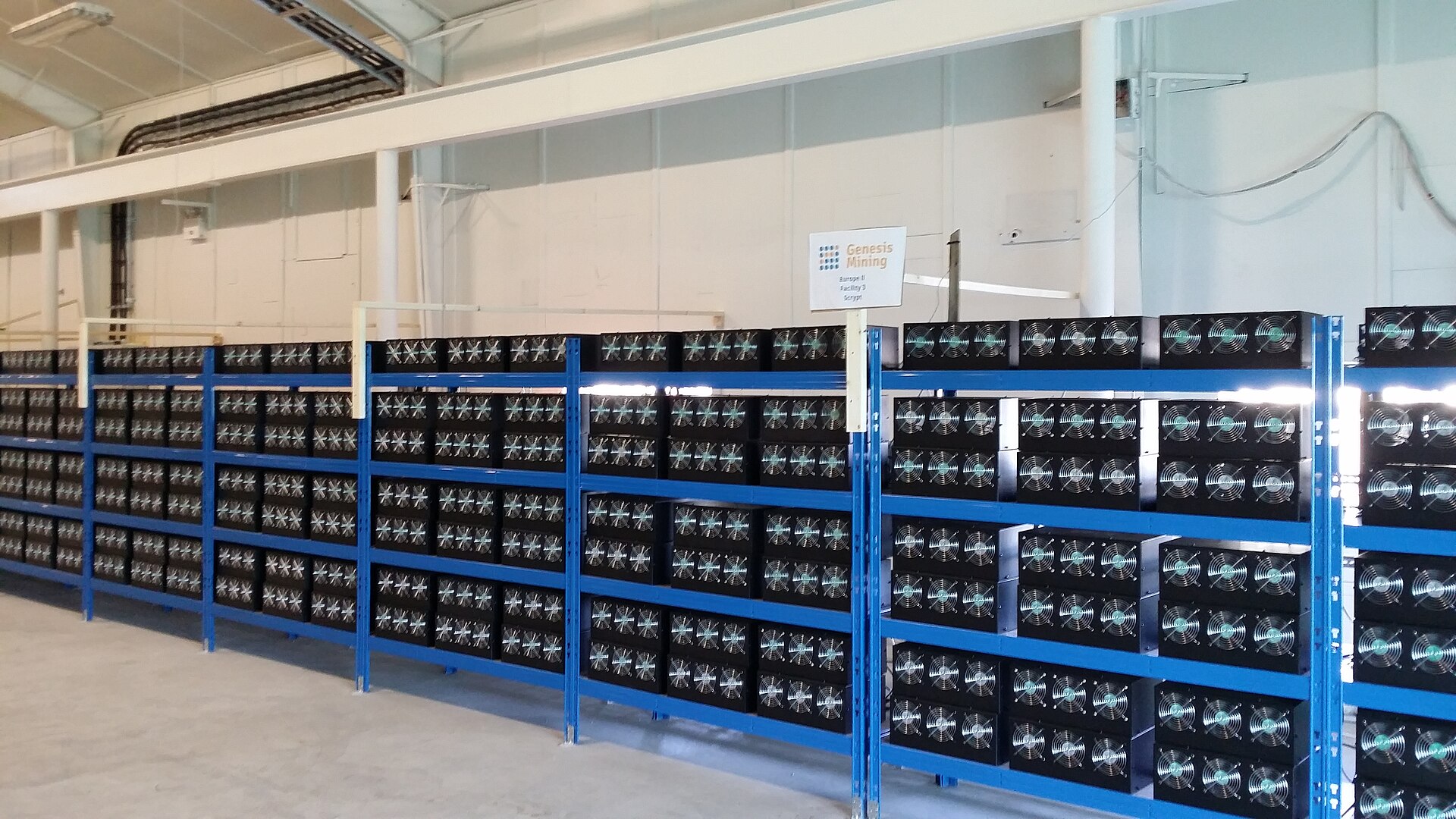
Photo by Marco Krohn · CC BY-SA 4.0 · archive photograph, 2014. Resized.